
Looking For an International Investigation? Here Are 10 Things You Should Know Before You Start
Trust. Expertise. Results. When you realize you need an international [...]
Do You Really Need an International Investigator? Here’s the Truth About Solving Global Legal Disputes
Expert insight. Global reach. Real results. You are facing a [...]
How to Avoid the Biggest Commercial Investigation Pitfalls in Complex Legal Disputes
Protect your assets. Win your case. Secure your future. Complex [...]
How to Avoid the Biggest Multi-Jurisdictional Legal Pitfalls
Expertise that travels. Global reach. Local results. You are scaling [...]
Commercial Support Matters: Why Your Legal Dispute Needs a Global Fraud Investigation
Investigate. Recover. Protect. You’ve likely been there before: or you’re [...]
7 Mistakes You’re Making with International Investigations (and How to Fix Them)
Trust. Expertise. Results. International investigations are a different beast. When [...]
The Proven Fraud Investigation Framework: How to Build a Winnable Case in 5 Steps
You suspect fraud. Maybe it's embezzlement, vendor kickbacks, or financial statement manipulation. Whatever the situation, you're facing a critical truth: suspicion isn't enough. You need a case that stands up in court, survives scrutiny, and delivers results.
Here's the reality. Most fraud investigations fail not because the fraud didn't happen, but because the investigation itself was sloppy. Evidence gets contaminated. Witnesses aren't interviewed properly. Documentation falls apart under legal review.
We've seen it happen. And we've seen the opposite, investigations executed with precision that lead to convictions, recoveries, and justice.
The difference? A proven framework.
Let's walk through the five-step process that transforms suspicion into a winnable case.
Step 1: Assemble Your Investigation Team (Before You Do Anything Else)
First things first. Don't rush in alone.
The moment fraud is suspected, you need to pull together the right people. This isn't a task for your standard HR team or finance department. You're building a case that might end up in criminal or civil court. That requires expertise.
Your team should include:
- Legal advisors who understand evidence admissibility and regulatory requirements
- Forensic accountants who can trace financial irregularities through complex records
- Investigation specialists trained in fraud detection and documentation
- IT forensics experts if digital evidence is involved

Before your team does anything, run conflicts checks. You can't have team members who have personal or professional relationships with suspects. Impartiality isn't optional, it's the foundation of credibility.
Next, establish clear authorization. Who has the authority to conduct this investigation? What are the boundaries? Get these answers in writing before you proceed. This protects both the investigation and your organization from legal challenges later.
One more critical element: confidentiality protocols. Fraud investigations can be derailed quickly if suspects get tipped off. Establish strict information controls from day one.
Step 2: Define Your Scope and Build Your Investigation Plan
Here's where many investigations go sideways. Teams jump straight into evidence collection without clearly defining what they're investigating.
You need a detailed investigation plan that answers these questions:
- What specific allegations are we investigating?
- Who are the persons of interest?
- What time period are we examining?
- Which business units, transactions, or accounts are under review?
- What's our hypothesis about how the fraud occurred?
Your plan should outline specific information-gathering methods. Will you need to retrieve archived records? Conduct site visits? Access third-party systems? Map this out now, not when you're already knee-deep in documents.
Create a realistic timeline with budget estimates. Fraud investigations consume resources quickly. You'll need to justify the effort and expense, especially if the investigation extends beyond initial expectations.
Define clear boundaries. Investigations that keep expanding in scope waste time and resources. Set parameters for what's in and what's out. You can always expand the scope later if new evidence emerges, but starting focused keeps you efficient.
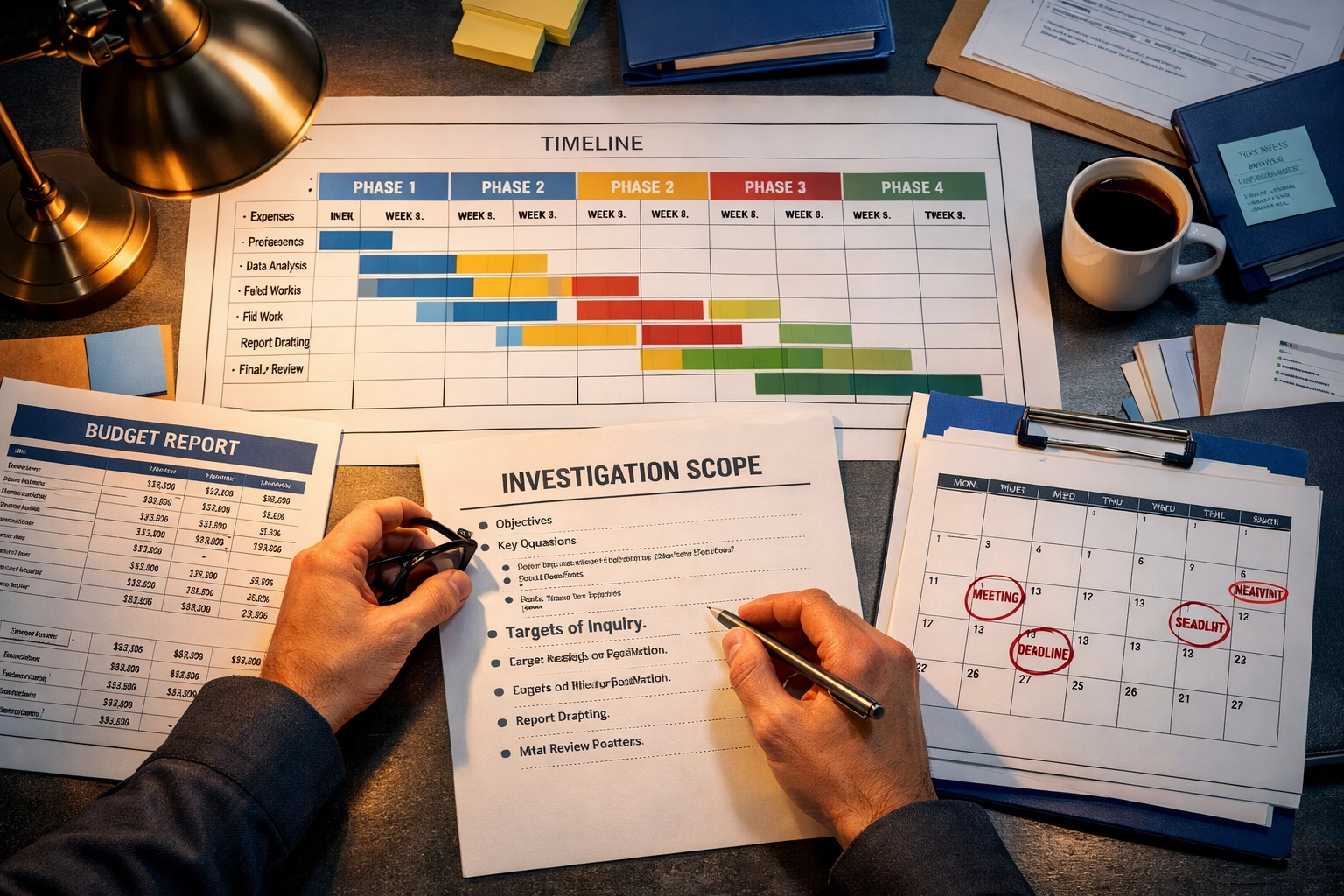
Document your methodology. This becomes crucial when you're explaining your process to regulators, law enforcement, or courts. A well-documented methodology demonstrates professionalism and thoroughness.
Step 3: Secure and Preserve Evidence (This Is Non-Negotiable)
Evidence is everything. And evidence that's mishandled is evidence you've lost.
The moment you launch an investigation, you need to secure potential evidence immediately. Fraud suspects often destroy evidence once they know they're under scrutiny. Time is critical.
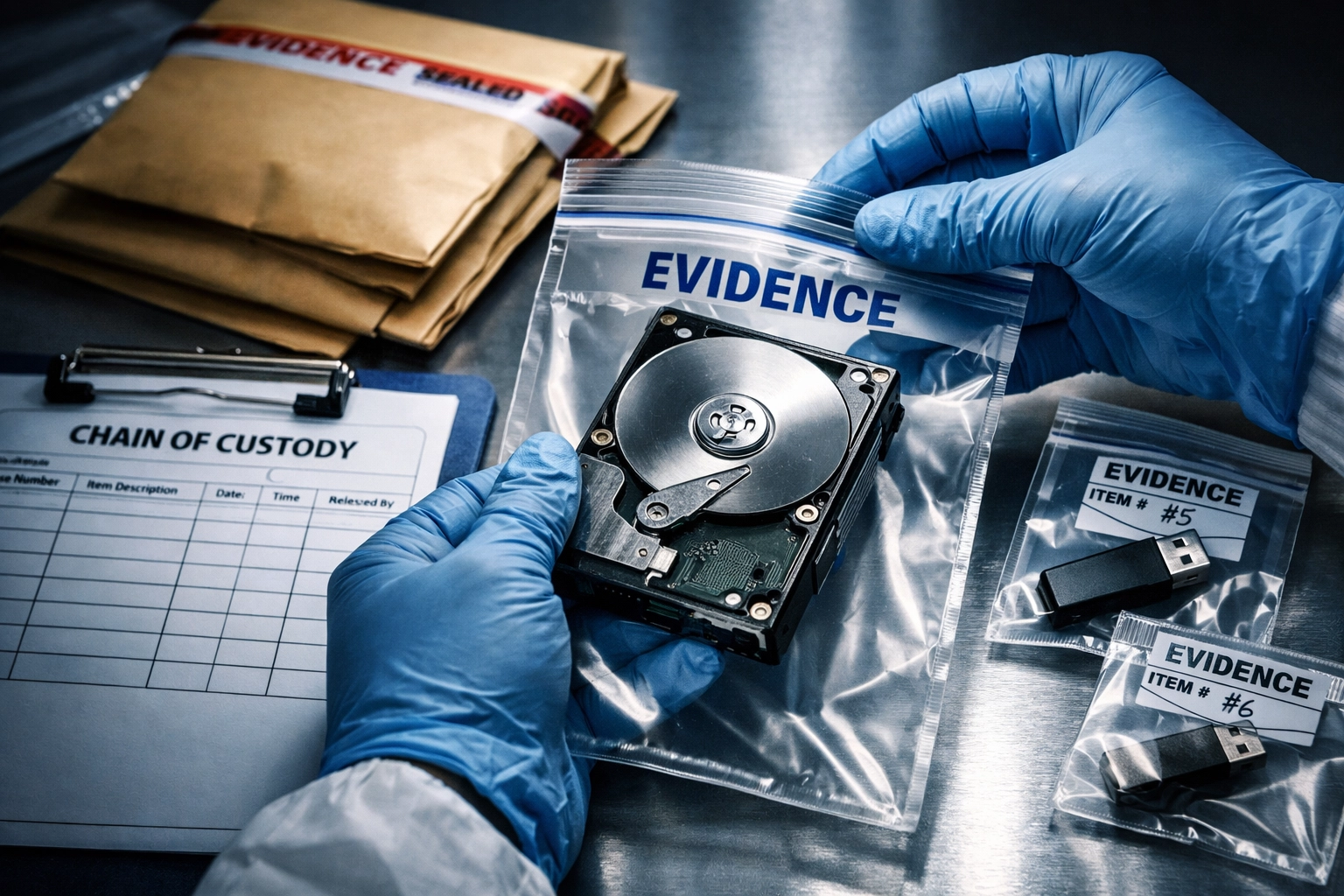
Start with digital evidence. Preserve computer hard drives, email accounts, cloud storage, and mobile devices. This requires specialized forensic tools to create exact copies without altering original data. One mishandled file can render crucial evidence inadmissible.
For physical evidence, establish a secure chain of custody. Every person who handles evidence must be documented. Where was it stored? Who accessed it? When? Create a paper trail that's bulletproof.
Document everything in its original form. Don't rely on summaries or interpretations. Courts want original documents, unaltered records, and verified copies when originals can't be produced.
Your evidence collection typically includes:
- Financial statements and transaction records
- Bank statements and cancelled checks
- Emails and internal communications
- System logs and audit trails
- Contracts and vendor agreements
- Policy and procedure documents
- Personnel files for relevant individuals
Work closely with legal counsel throughout this process. Evidence rules are complex and vary by jurisdiction. What's admissible in one court might not be in another. Get expert guidance on preservation requirements specific to your situation.
If you're dealing with workplace fraud, you'll need to balance investigation needs with employment law requirements. This is where professional investigation services become invaluable.
Step 4: Conduct Interviews and Analyze Your Data
Now you're ready to talk to people. But not just anyone, and not in just any order.
Plan your interview sequence strategically. Start with complainants and witnesses who can provide context without alerting suspects. Move toward persons of interest, then suspects last.
Use trained forensic interviewers for critical conversations. These aren't casual chats, they're formal interviews that might be cited in legal proceedings. You need people who know how to ask the right questions, document responses accurately, and maintain legal defensibility.
Watch for inconsistencies. When different witnesses give conflicting accounts, that's where your investigation deepens. Don't accept surface-level explanations. Probe contradictions carefully.
Simultaneously, run your data analytics. Modern fraud often leaves digital fingerprints. Look for:
- Transaction patterns that deviate from normal behavior
- Unusual timing of activities (late night, weekend transactions)
- Repeated interactions with the same vendors or accounts
- Missing or altered records in sequence
- Financial anomalies that don't match business operations
Conduct background investigations on key suspects. Public records, social media, and professional histories can reveal undisclosed conflicts of interest, unexplained wealth, or connections to other parties involved in the fraud.
Cross-reference everything. Interview statements should align with documentary evidence. When they don't, you've found areas requiring deeper investigation.
This phase takes time. Resist pressure to rush through it. A thorough investigation that takes three months is better than a sloppy one that takes three weeks and falls apart under scrutiny.
Step 5: Document, Report, and Take Action
Your investigation concludes with comprehensive documentation and clear recommendations.
Your final report should be objective, thorough, and accessible. Include:
- Executive summary of findings
- Detailed methodology explaining your investigation process
- Complete evidence inventory with chain of custody documentation
- Summary of all interviews conducted
- Analysis of findings with supporting evidence
- Clear conclusions based on the evidence
- Specific recommendations for next steps
Present evidence clearly. Use visual aids like timelines, flowcharts, and financial summaries. Complex fraud schemes need to be explained in ways that non-experts can understand. Your report might be read by executives, board members, prosecutors, or judges, write for all audiences.
Identify control gaps and vulnerabilities that allowed the fraud to occur. Your recommendations should address both the immediate fraud and systemic weaknesses. This transforms your investigation from a reactive exercise into a preventive strategy.
Based on your findings, you'll pursue one or more courses of action:
- Referring the matter to law enforcement for criminal prosecution
- Initiating civil litigation to recover losses
- Taking disciplinary action against employees involved
- Implementing new controls and procedures
- Recovering assets through various legal mechanisms

At Zazinga Group, our investigation services have helped businesses and individuals build fraud cases that achieve real outcomes. We've seen firsthand how a methodical, professional approach makes the difference between justice served and justice denied.
The Framework Works, When You Execute It Properly
Building a winnable fraud case isn't about luck. It's about following a proven process with discipline and expertise.
You need the right team from the start. You need a clear plan that defines scope and methodology. You need ironclad evidence handling that preserves admissibility. You need thorough interviews and data analysis that uncover the complete picture. And you need documentation that stands up to the toughest scrutiny.
Skip steps or cut corners, and your case weakens. Follow the framework, and you build something that delivers results.
Whether you're dealing with internal fraud, vendor schemes, or complex financial manipulation, this five-step approach gives you the structure to build a case that wins.
The question isn't whether fraud happened. The question is whether you can prove it. With the right framework, the answer is yes.
Need expert support for your fraud investigation? Contact our team for specialized investigation services that get results. We bring the expertise, the methodology, and the track record you need when the stakes are high.

Share This Story, Choose Your Platform!