
10 Reasons Your International Recovery Strategy Isn’t Working (And How to Fix It)
Results matter. Legal precision. Global reach. You’ve poured resources into [...]
Looking for an International Investigator? Here Are 10 Things You Should Know Before Crossing Borders
Expert insight. Global reach. Real results. When your problems cross [...]
Why Comprehensive Commercial Insights Will Change the Way You Handle Business Disputes
Clarity. Strategy. Resolution. When you’re running a business, disputes aren't [...]
International Investigation Matters: Why Cross-Border Expertise Is Your Best Legal Defense
Global reach. Ironclad defense. Proven results. The world is smaller [...]
How to Legally Recover Assets After Romance Scams: 5 Steps to Reclaim Your Life
Expert recovery. Proven results. Complete discretion. You thought it was [...]
Global Asset Tracing 101: A Beginner’s Guide to Mastering International Recovery
Expert recovery. Global reach. Real results. You’ve been wronged, and [...]
Is Your Legal Team Prepared for a Multi-Jurisdiction Investigation? Here’s the Truth
Trust. Expertise. Results.
Here's a question that should keep you up at night: If regulators in three different countries knocked on your door tomorrow, would your legal team know what to do?
Most wouldn't. And that's a problem.
Multi-jurisdiction investigations aren't just complicated: they're a minefield of conflicting laws, cultural differences, and strategic pitfalls that can turn a manageable situation into a corporate disaster. Your standard investigation playbook? It's not going to cut it.
Let's talk about what you're really up against and how to fix it before you're scrambling in crisis mode.
The Problem: Your Single-Jurisdiction Playbook Is Obsolete
You've probably got a solid investigation protocol. It works beautifully when everything stays within your home jurisdiction. But the moment your investigation crosses borders, everything changes.
Different countries don't just have different laws: they have fundamentally different legal philosophies. What's protected in London might be discoverable in New York. What's confidential in Frankfurt could be compellory in Singapore.
And here's the kicker: most legal teams don't realize they're unprepared until it's too late.

The Four Critical Gaps in Your Current Preparation
1. Legal Regime Conflicts Will Destroy Your Strategy
Let's start with the big one: conflicting laws across jurisdictions.
You need to understand that legal privilege works differently everywhere. In some jurisdictions, your communications with internal counsel aren't protected at all. Zero protection. That memo you thought was privileged? It could become exhibit A in a regulatory proceeding.
Data protection laws are another landmine. The GDPR in Europe, privacy laws in California, bank secrecy regulations in Switzerland: they all have different requirements and restrictions. Collect data the wrong way in one jurisdiction, and you've potentially violated laws in three others.
Then there's the disclosure trap. Make an admission or settlement in one country, and you might have just handed ammunition to regulators, shareholders, or competitors in another. Every statement has ripple effects.
2. Your Team Composition Is Probably Wrong
Here's an uncomfortable truth: your internal legal team, no matter how talented, cannot handle a multi-jurisdiction investigation alone.
You need local counsel in every relevant jurisdiction. Not just any local counsel: you need experts who understand local regulatory relationships, cultural nuances, and unwritten rules that govern how investigations actually work on the ground.
Language barriers matter more than you think. Subtle differences in legal terminology can completely change the meaning of a document. Cultural differences in business practices can make perfectly normal behavior in one country look suspicious in another.
Your investigation team needs to be genuinely international from day one. Anything less is setting yourself up for failure.

3. Your eDiscovery Process Isn't Ready for Global Complexity
Discovery in a single jurisdiction is challenging enough. Go multi-jurisdictional, and it becomes exponentially more complex.
Every piece of data you collect needs to be evaluated against the laws of every jurisdiction involved. Can you transfer it across borders? Who can access it? How must it be stored? What metadata needs to be preserved?
Different countries have different standards for what constitutes admissible evidence. Your beautifully preserved electronic documents might not meet the requirements in another jurisdiction. And if you mess up chain of custody protocols, you risk having critical evidence thrown out entirely.
You need a coordinated data review strategy that accounts for all jurisdictions from the start. Trying to retrofit your approach midway through is a recipe for disaster.
4. You're Underestimating Settlement Implications
Most legal teams focus on resolving the immediate investigation. That's thinking too small.
Any settlement or admission in one jurisdiction affects your legal position in all others. Regulatory agencies talk to each other. Shareholders watch for admissions they can use in class actions. Competitors monitor for information that could give them an edge.
You also face collateral consequences you might not have considered: debarment from government contracts, reputational damage in markets where you weren't even under investigation, and exposure to follow-on litigation that could dwarf your original problem.
Every decision needs to be evaluated through a global lens, not just the jurisdiction where the immediate pressure exists.

How to Actually Prepare: Your Action Plan
Start with Early Identification
The moment you suspect a multi-jurisdiction investigation is possible, identify the key legal issues in every relevant jurisdiction. Not later. Not when regulators make formal contact. Now.
Map out the regulatory landscape. Understand who the key players are. Know what triggers mandatory disclosure in each jurisdiction.
This early work isn't just helpful: it's essential to protecting your investigation's integrity.
Engage Local Teams Immediately
Don't wait to bring in local counsel. Every day you delay is a day you're operating blind in that jurisdiction.
Local experts bring more than legal knowledge: they bring relationships with regulators, understanding of local enforcement priorities, and insight into how investigations actually proceed in practice. This intelligence is invaluable for strategic planning.
Build your international team before you need them. Investigation services that understand multi-jurisdiction coordination can be the difference between controlled management and complete chaos.
Develop a Unified Strategy with Local Flexibility
You need one overall strategy that accounts for all jurisdictions simultaneously. But that strategy must be flexible enough to adapt to local requirements and practices.
This is the hardest part: balancing consistency across jurisdictions with the need to respect local differences. Your approach in one country might directly contradict best practices in another.
The key is coordinating everything from the top while empowering local teams to execute in ways that make sense for their jurisdiction. It's a delicate balance that requires constant communication.
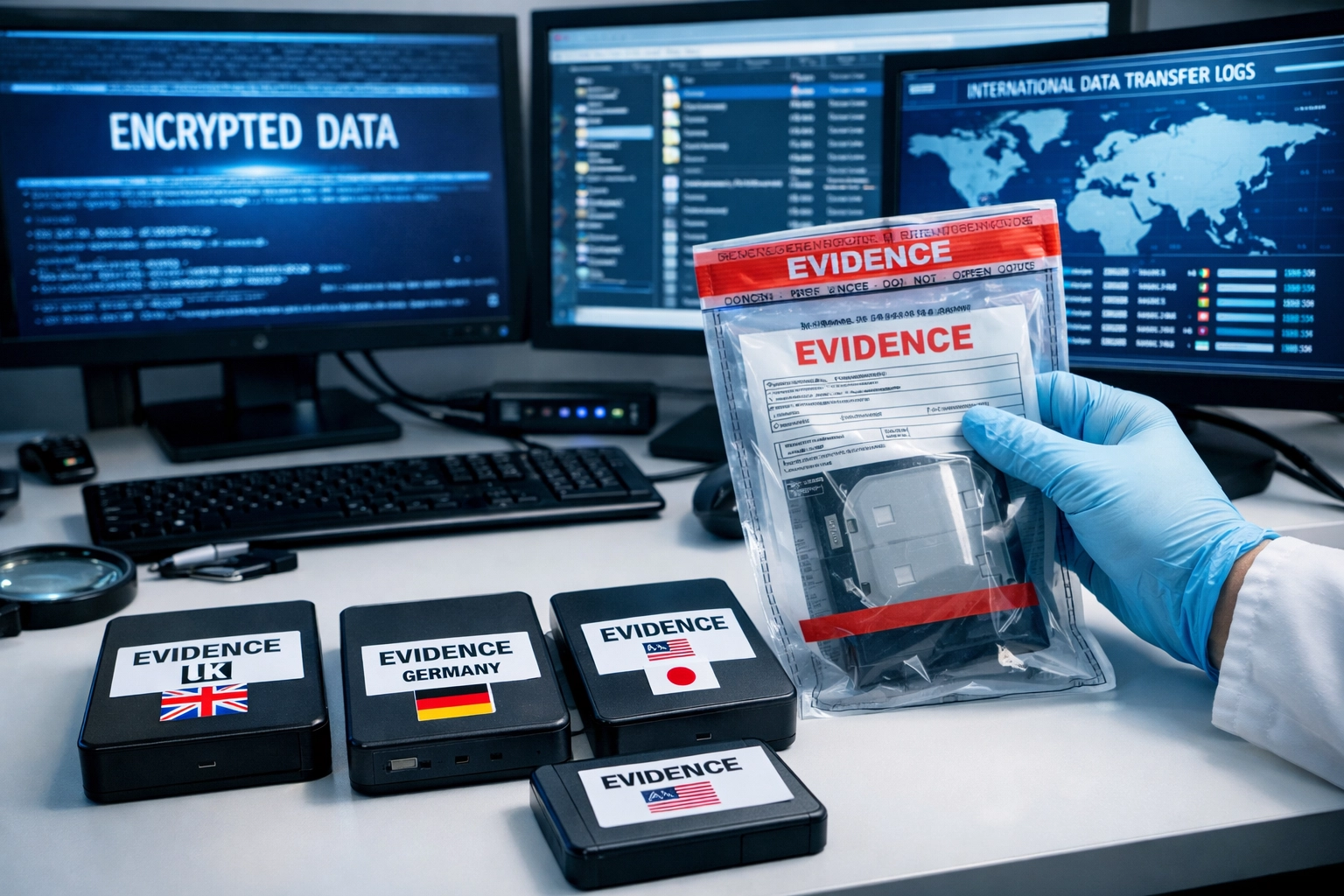
Create Clear Data Management Protocols
Establish comprehensive protocols for how data will be collected, transferred, stored, and reviewed across all jurisdictions. These protocols need to satisfy the strictest requirements among all jurisdictions involved.
Document everything. Your data management process needs to be defensible in every jurisdiction simultaneously.
Use technology that supports multi-jurisdiction requirements from the start. Trying to retrofit your eDiscovery platform mid-investigation creates unnecessary risks.
Plan for the Collateral Consequences
Before making any settlement or admission, run it through a full collateral consequences analysis. What are the implications in every jurisdiction? What follow-on risks does it create?
Sometimes the best resolution in one jurisdiction creates unacceptable risks in others. You need to identify these conflicts early so you can negotiate holistically rather than piecemeal.
Think beyond the immediate investigation. Your decisions today will affect your business for years.
The Bottom Line: Preparation Isn't Optional
Multi-jurisdiction investigations are fundamentally different from single-jurisdiction matters. Your standard playbook won't work. Trying to figure it out as you go creates massive, unnecessary risks.
The truth is simple: you either prepare properly, or you pay the price in increased costs, worse outcomes, and exposure to risks you didn't even know existed.
Most legal teams are unprepared. The ones that are prepared have a massive strategic advantage.
Which camp are you in?
Take the First Step
Don't wait until you're in crisis mode. Review your current investigation protocols. Identify the gaps. Build the relationships you'll need.
If you're facing a multi-jurisdiction investigation or want to ensure your team is prepared, contact us for a confidential consultation. We specialize in navigating the complex intersection of multiple legal regimes and can help you develop a strategy that actually works.
Your next investigation could involve multiple jurisdictions. The question is whether you'll be ready.

Share This Story, Choose Your Platform!